
Why Location Matters in Pool Construction
Before pool construction begins, your builder needs to determine where the pool will go. Location affects structural feasibility, drainage, safety, and long-term maintenance. It also determines how complex — and costly — the excavation phase will be.
Factors that influence placement include:
- Zoning laws and HOA rules: Requirements vary across Fort Worth, Burleson, Godley, Joshua, Cleburne, Granbury, Aledo, and Weatherford
- Yard slope and soil composition: Unstable or rocky ground can complicate excavation
- Safety considerations: Especially important for households with young children
- Pool type and size: The design you plan to build
Lemaster Custom Pools assesses your property during an initial site visit before any pool construction plans are finalized. Getting the location right early prevents costly redesigns later.
How Do I Make the Right Choices for My Pool?
Pool construction involves dozens of decisions. You’ll need to choose the pool shape, depth, finish materials, coping style, decking, equipment, and optional features like lighting or water elements. It can feel overwhelming!
A good pool construction company helps guide you through these decisions step by step.
They explain the tradeoffs between cost, durability, and appearance before construction begins.
At Lemaster Custom Pools, those conversations happen early. We review finish options such as PebbleTec® aggregate, quartz, and standard plaster. We also discuss equipment choices like Pentair variable-speed pumps and automation systems.
Need inspiration? See our gallery here.
What Happens When a Pool Builder Visits Your Home?
A pre-construction site visit is a technical step, not just a sales call. During this visit, your pool construction team will:
- Test the soil to confirm it’s suitable for excavation and can support the pool’s structure
- Measure the yard and mark the pool’s footprint
- Discuss decking, fencing, and drainage requirements
Do I Need A Swimming Pool Permit?
All municipalities in the South Fort Worth area require a swimming pool permit. Permitting is one area where inexperienced contractors often cut corners.
Lemaster Custom Pools handles all government permits across the areas we serve. That means homeowners don’t have to manage paperwork or worry about compliance issues.
What Happens During Pool Construction Excavation?
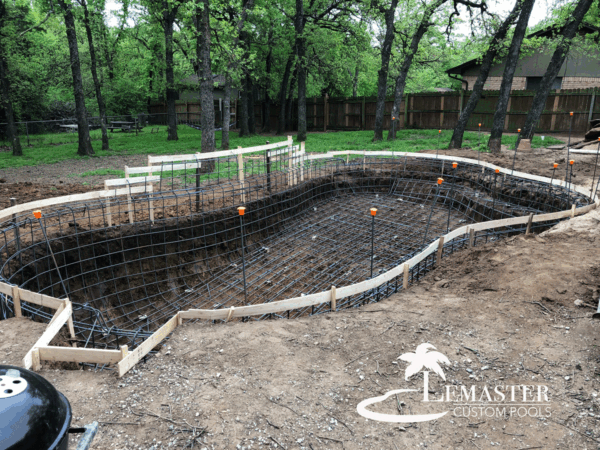
Excavation is the phase when pool construction first becomes visible. This stage prepares the ground so the pool structure can be built safely and securely.
How Is the Pool’s Structure Built?
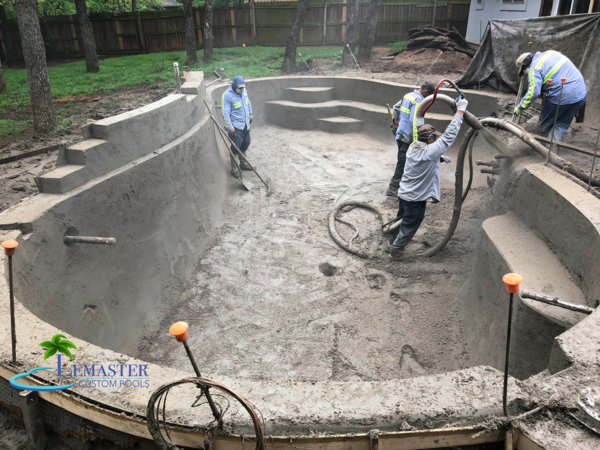
The structural phase of pool construction begins after excavation and follows several key steps.
What Is Pool Coping and Why Does It Matter?
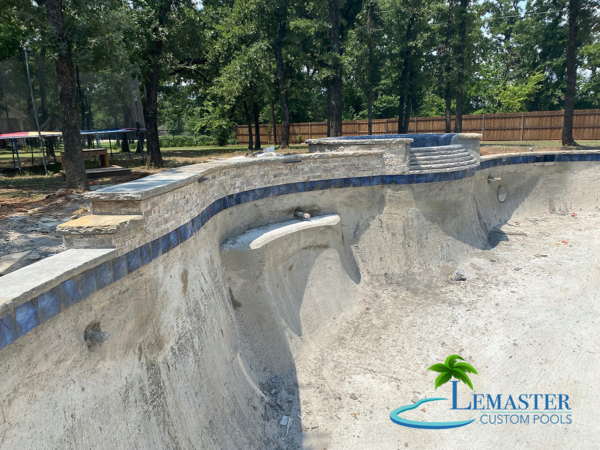
Coping is the cap around the top edge of the pool. It serves both structural and design purposes and is one of the most visible elements of the pool.
Functionally, coping covers the structural edge, directs water away from the pool toward surrounding drains, and creates a safe finished border for swimmers.
Material choice affects durability, heat retention, and appearance. Common options include:
- Concrete: Affordable, durable, and versatile
- Brick: Traditional appearance with good durability
- Natural stone: Premium appearance, but heat retention varies
In Texas summers, heat retention is a real consideration. Lemaster Custom Pools installs a range of coping materials and can help you choose based on how your pool will actually be used.
When Is the Pool Finished?
After tile and coping are complete, pool construction moves into its final phase. Plumbers connect all drainage and circulation components. Electricians wire pumps, lighting, and any automation systems. Decking and fencing are built around the pool perimeter.
The interior then receives its finish coat — one of the most consequential decisions in the pool construction process. The main options are:
- Standard plaster: Most affordable, typically lasting 7–10 years before resurfacing is needed
- Quartz finishes: More durable and stain-resistant than plaster, with a smoother surface
- PebbleTec® aggregate finishes: The most durable option, with a natural stone look and superior resistance to chemical wear and staining
Once the interior is complete, the pool is filled, water chemistry is balanced, and all equipment is tested before the project is handed off.
What to Review Before Signing
Before signing a contract, review the warranty coverage. Lemaster Custom Pools includes a 3-year all-inclusive warranty covering equipment, workmanship, and materials.
Make sure you understand:
- Warranties on workmanship and materials
- Manufacturer warranties on installed equipment
- Available service and repair options after construction
As an Authorized Pentair Warranty Service Center, Lemaster Custom Pools services the equipment we install long after construction is complete.
Pool Construction Service Areas
Lemaster Custom Pools provides professional pool construction services throughout the South Fort Worth region.
- Godley, TX (Retail Store & Design Center)
- Burleson, TX
- Joshua, TX
- Cleburne, TX
- Crowley, TX
- Benbrook, TX
- Aledo, TX
- Weatherford, TX
- South Fort Worth
Don’t see your city? Call us at 817-389-2688!
Or, complete the form below with your address.
Get a Free Pool Construction Quote!
Fill out the form below for a free, no-obligation pool construction quote.
"*" indicates required fields