
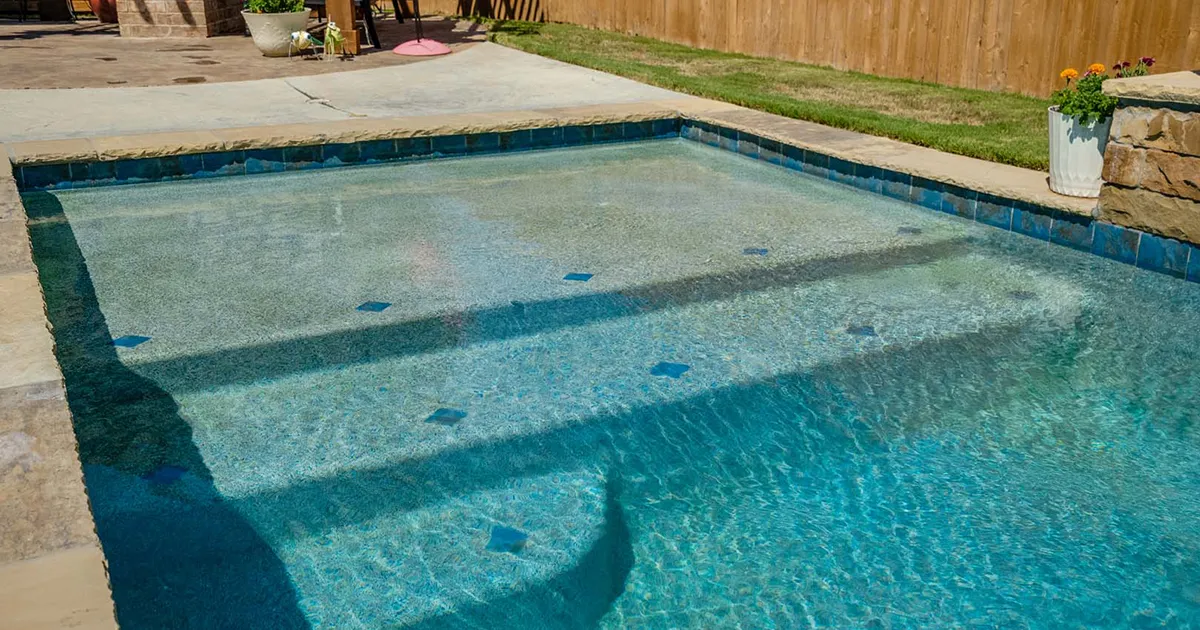
Your pool water may look crystal clear, but that doesn’t always mean it’s safe to swim in.
Water that’s out of balance can lead to algae growth, skin and eye irritation, stains, and even damage to your pool’s surface and equipment. The good news is that regular pool water testing can catch small problems before they become expensive repairs.
If you’re looking for pool water testing near South Fort Worth, Lemaster Custom Pools can help keep your pool clean, balanced, and ready to enjoy.
Why Is Pool Water Testing Important?
Your pool depends on the right mix of chemicals to stay clean and safe. When those levels get out of balance, problems can happen quickly.
Regular water testing helps:
- Keep the water safe for swimming
- Prevent algae growth
- Reduce skin and eye irritation
- Protect your pool plaster and tile
- Prevent damage to pumps, filters, and other equipment
- Make chlorine work the way it should
Testing your water regularly is one of the easiest ways to protect your investment and avoid costly repairs later.
What Does Pool Water Testing Check?
Professional pool water testing checks several important parts of your pool’s water chemistry.
pH
The pH level measures how acidic or basic your water is.
If the pH is too high, chlorine won’t work as well. If it’s too low, the water can damage your pool and irritate swimmers’ eyes and skin.
Chlorine
Chlorine kills bacteria, viruses, and algae. Testing makes sure there’s enough chlorine to keep your pool clean without adding more than you need.
Total Alkalinity
Alkalinity helps keep your pH stable. When it’s out of balance, your pH can swing up and down, making your water harder to manage.
Calcium Hardness
Calcium levels affect your pool’s plaster and tile. Water that’s too soft can wear away surfaces, while water that’s too hard can leave behind scale and stains.
Stabilizer (Cyanuric Acid)
Texas sunshine can quickly break down chlorine. Stabilizer helps protect chlorine so it lasts longer and works more effectively.
When Should You Test Your Pool Water?
Most pools should be tested at least once a week during swimming season.
It’s also a good idea to test your water:
- After heavy rain
- After a pool party
- After adding fresh water
- If the water looks cloudy
- If algae starts to grow
- Before opening your pool for the season
- Before closing your pool
Regular testing helps catch problems early, before they turn into bigger issues. It can also reduce the need for costly repairs by catching water chemistry problems before they damage your pool’s plaster or equipment.
Should You Test Your Pool Yourself?
Many homeowners use test strips or home testing kits. These can give you a general idea of your water chemistry, but they aren’t always as accurate as professional testing.
If your water won’t stay balanced, algae keeps coming back, or you’re not sure which chemicals to add, professional testing can save you time, money, and frustration.
What Happens During Professional Pool Water Testing?
When Lemaster Custom Pools tests your pool water, we do more than check the numbers.
We’ll identify what’s out of balance, explain what the results mean, and recommend the right solution. If your pool needs chemical adjustments, we’ll make sure it’s treated correctly so you can enjoy clean, healthy water again.
Schedule Professional Pool Water Testing In the Fort Worth Area
Keeping your pool water balanced doesn’t have to be a guessing game. Lemaster Custom Pools provides professional pool water testing throughout Southlake, Keller, Aledo, Burleson, Granbury, and Fort Worth.
If your pool water doesn’t look right, your chemicals seem off, or you just want to know everything’s balanced, our team can take care of it.
Call 817-389-2688 today to schedule professional pool water testing.
Related:
Residential Pool Construction: What to Expect
Pool Tile Replacement: What You Should Know
Pool Leak Repair: Signs You Have a Leak and What to Do