
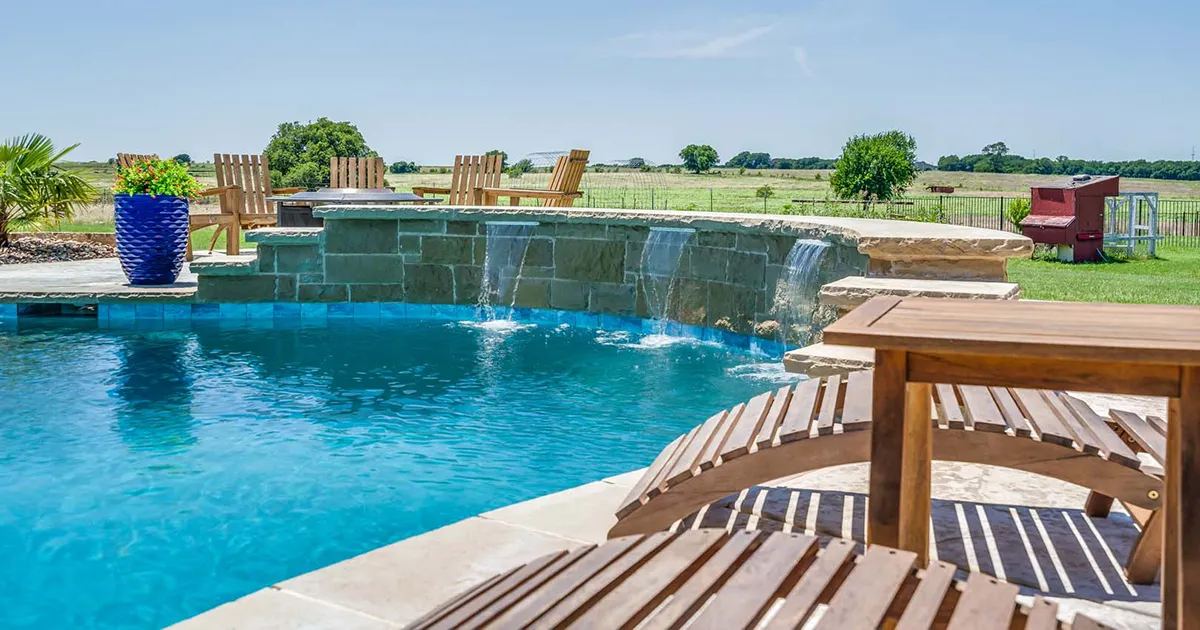
When your pool was new, the plaster felt smooth, looked bright, and made the water sparkle. Over time, though, sun, chemicals, and everyday use have worn that surface down.
Maybe you’ve noticed rough spots on the steps. Perhaps stains won’t come clean no matter how much you scrub. Or maybe you’re seeing cracks or areas where the plaster is starting to chip away.
If you own a pool in Southlake, Keller, Aledo, Burleson, Granbury, or the surrounding Fort Worth area, knowing when it’s time to resurface can save you money and help prevent bigger problems later.
What Does Pool Plaster Do?
Pool plaster gives your pool its finished look, but it also protects the gunite shell underneath. It creates a smooth, waterproof surface that’s comfortable to walk on while helping keep the pool structure in good condition.
As plaster ages, it naturally wears down from sunlight, chemicals, and regular use. Most plaster pools eventually need repairs or resurfacing to keep the surface smooth and continue protecting the pool beneath it.
Signs You May Need Pool Plaster Repair
Small plaster problems usually don’t happen overnight. They often start with minor wear that’s easy to overlook.
Watch for signs like:
- Rough or sandy spots
- Small cracks
- Chips or missing plaster
- Stains that won’t brush away
- Discoloration or fading
- Areas that feel sharp under your feet
- Plaster dust collecting on the pool floor
Minor plaster damage is often easier and less expensive to repair when it’s addressed early. Waiting too long can allow water to reach the structure underneath, leading to more extensive repairs.
Can Pool Plaster Be Repaired?
In many cases, yes.
Small cracks, chips, or isolated damaged areas can often be patched without resurfacing the entire pool. Pool plaster repair works best when the damage is limited and the rest of the surface is still in good shape.
An experienced pool builder can tell whether the damage is isolated or whether the surrounding plaster is also wearing out. In some cases, a simple repair is all that’s needed. In others, resurfacing is the better long-term solution.
When Pool Plaster Repair Isn’t Enough
Sometimes repairing one area isn’t the best long-term solution.
You may need pool resurfacing if your pool has:
- Widespread cracking
- Large areas of worn or missing plaster
- Heavy etching from years of chemical exposure
- Extensive staining
- Multiple previous patch repairs
- A surface that’s rough throughout the entire pool
As plaster continues to wear down, the damage often spreads. What starts as a small repair today can turn into a much larger project later. Resurfacing restores the entire finish before more serious damage develops.
What Happens During Pool Plaster Resurfacing?
Pool resurfacing removes the old, worn finish and replaces it with a new one.
A new surface improves the appearance of your pool, makes it more comfortable to swim in, and protects the gunite shell for years to come.
Depending on your pool and the look you want, you may choose:
- Traditional white plaster
- Quartz finishes
- Pebble aggregate finishes
Many homeowners also update their waterline tile, coping, or decking while the pool is empty, giving the entire backyard a fresh new look at the same time.
Don’t Wait Until Small Problems Become Big Ones
It’s tempting to ignore a few rough spots or hairline cracks, especially if your pool still holds water.
Plaster damage usually gets worse over time. Heat, changing weather, pool chemicals, and regular use continue to wear down the surface. The sooner you have it inspected, the more repair options you’ll usually have, and you may be able to avoid more costly work later.
Pool Plaster Repair and Resurfacing in the Fort Worth Area
If your pool surface is rough, cracked, stained, or simply showing its age, the team at Lemaster Custom Pools can help. We’ll inspect your pool, explain whether pool plaster repair or complete resurfacing is the better long-term solution, and recommend the option that makes the most sense for your pool and your budget.
We’re proud to provide pool plaster repair and pool resurfacing for homeowners throughout Fort Worth, Southlake, Keller, Aledo, Burleson, Granbury, and surrounding communities. Contact Lemaster Custom Pools today to schedule your free consultation and bring your pool back to life.
Related:
Pool Resurfacing Cost: What to Expect
Pool Leak Repair: Signs You Have a Leak and What to Do
Pool Deck Crack Repair: Causes, Fixes, and When to Call a Pro